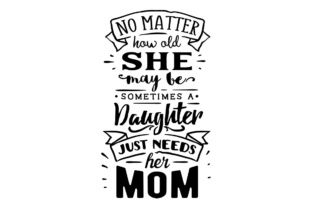
No Matter How Old She May Be, Sometimes a Girl Just Needs Her Mom
As someone who has spent years navigating the intersection of digital design and physical stitching, I approach every new machine embroidery design with a critical eye. The market is flooded with generic text-based assets that look fine on a screen but fall apart under the needle. When I first encountered the design titled No Matter How Old She May Be, Sometimes a Girl Just Needs Her Mom, my immediate reaction was to assess its emotional weight against its technical viability. This isn't just about pretty words; it is about how those words translate into thread, stabilizer, and fabric.
The First Impression: Mood and Visual Weight
The phrase itself carries a heavy, warm sentiment that resonates deeply within the Family category. It speaks to an enduring bond that transcends age, making it a prime candidate for sentimental gifts or personal apparel. Visually, the layout needs to balance readability with aesthetic appeal. In a text-heavy design like this, the typography dictates the entire mood. If the lettering is too thin, it risks breaking during stitching; if it is too dense, it can cause puckering on lighter fabrics.
When reviewing this specific asset, I am looking for a font style that feels personal yet durable. A script font might offer elegance, but it requires careful attention to stitch density to prevent gaps in the fill. Conversely, a bold sans-serif offers clarity but must be spaced correctly to avoid looking blocky. The visual personality of No Matter How Old She May Be, Sometimes a Girl Just Needs Her Mom should feel inviting, not overwhelming. It needs to sit comfortably on a garment without dominating the wearer's silhouette.
Real-World Application: From Digital File to Finished Product
Let's move beyond the screen and imagine a real scenario. Picture a small shop owner preparing a custom embroidered tote bag for a Mother's Day sale. The customer wants something that says "I still need you" without being cheesy. Using the No Matter How Old She May Be, Sometimes a Girl Just Needs Her Mom design on a sturdy canvas tote bag allows the text to stand out clearly. The flat surface of the bag is forgiving, making it an excellent starting point for testing the design.
However, consider a different application: a sweatshirt embroidery project. Here, the challenge increases. Sweatshirts are thick, textured, and often made of cotton blends that stretch. If the design is too large or the stitch count is too high, the fabric will pucker around the letters, ruining the professional look of the finished product. For a sweatshirt, I would recommend placing this design on the upper left chest or across the back, ensuring the hoop size accommodates the full width of the text without stretching the fabric excessively.
For the Etsy seller or craft business owner, versatility is key. This design works beautifully as an embroidered patch. By stitching the text onto felt or twill with a satin stitch border, you create a detachable accessory that can be applied to denim jackets, backpacks, or even hats. This transforms a single digital file into multiple revenue streams. Whether it is a baby item, a holiday gift, or a boutique product, the adaptability of the text determines its commercial success.
Navigating Technical Challenges and Fabric Limitations
Not every fabric plays nice with long phrases. When working with No Matter How Old She May Be, Sometimes a Girl Just Needs Her Mom, there are specific scenarios where caution is required. Thin fabrics like silk or lightweight rayon are risky; the weight of the thread can distort the material, making the text unreadable or causing holes. Similarly, stretchy knits require a strong stabilizer to maintain the integrity of the stitches.
Dark fabrics present another hurdle. If the design relies on light thread colors against a black background, the contrast must be sharp. You may need to add a layer of underlay or use a tonal fill to ensure the white or pastel thread stands out. Without proper underlay, the dark fabric can show through the gaps in the running stitch or fill stitch, diminishing the visual impact.
Curved surfaces, such as caps, demand a strategic approach. Long lines of text can warp when stitched on a curved brim or crown. If you attempt to place the full phrase on a cap, you risk the text becoming distorted or difficult to read from a distance. In these cases, it is often better to shorten the message or break it into two smaller sections. Always test the design on a scrap piece of the actual fabric first to see how the hoop tension affects the curvature.
Maximizing Value and Professional Presentation
The true value of a machine embroidery design lies in its ability to elevate a handmade product. A well-executed version of No Matter How Old She May Be, Sometimes a Girl Just Needs Her Mom signals quality to the buyer. It shows that the creator cares about detail, from the choice of thread colors to the precision of the stitching. This attention to detail builds customer trust and encourages repeat business.
For digital product sellers, the availability of multiple formats is crucial. Receiving the design as an SVG file, transparent PNG, EPS, and DXF ensures compatibility with various software and machines. However, having the files is only half the battle. You must verify the stitch count and adjust settings based on your specific machine. A design that looks perfect in a printable mockup might reveal issues once the needle hits the fabric.
Practical Designer Notes for Success
- Test on Scrap Fabric: Never skip this step. Stitch the design on a piece of the intended fabric to check for puckering, thread breaks, or spacing issues.
- Check Thread Contrast: Ensure the thread colors pop against the background. Use a color chart to preview combinations before committing to expensive threads.
- Review Stitch Density: Adjust the density settings if the design appears too tight or too loose. Dense areas may need more tear-away stabilizer.
- Confirm Hoop Size: Measure the design dimensions against your hoop. If the text is too wide, consider splitting it into two separate hoops.
- Inspect Small Details: Zoom in on the smallest letters. Tiny serifs or intricate details can get lost in the stitching process.
- Use Proper Stabilizer: Choose a stabilizer that matches the fabric weight. Heavy fabrics need cutaway stabilizers, while light fabrics benefit from tear-away.
- Verify Licensing: Before selling finished items or digital products, confirm the license terms. Ensure you have the right to use the design for commercial embroidery projects.
In conclusion, No Matter How Old She May Be, Sometimes a Girl Just Needs Her Mom is more than just a string of words; it is a tool for connection. When executed with care, it becomes a cherished part of a personalized gift or a standout piece in a craft business collection. By understanding the technical nuances of machine embroidery and respecting the limitations of different materials, designers can turn this simple phrase into a lasting memory stitched in thread.